
The Murder Gene Debate
Defending JacobThe family history of violence and emerging behavioral genetics force Andrew and Jacob to confront whether inheritance can explain, excuse, or stigmatize criminal behavior.
increasing Bearing strength in each event
 decreasing
Bearing strength in each eventdecreasingA Buried Ancestry
A Buried Ancestry
Three generations of violence
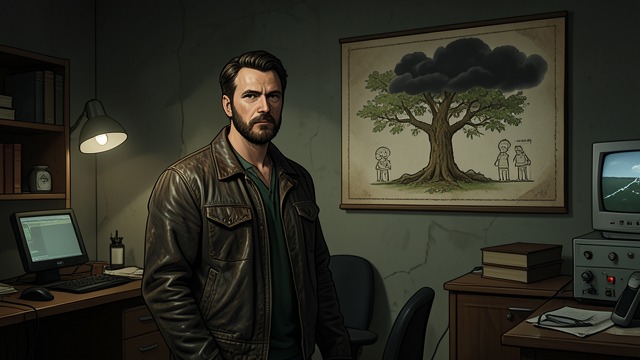
Andrew’s great-grandfather James Burkett and grandfather Russell Barber lived with serious violence; his father Billy was imprisoned for murder. Andrew deliberately avoids learning the full history.
A self-imposed break
He believes that suppressing the family story can stop its influence from passing to Jacob. The strategy protects Andrew’s identity for years but rests on secrecy rather than understanding.
The Confession to Laurie
The Confession to Laurie
A secret exposed
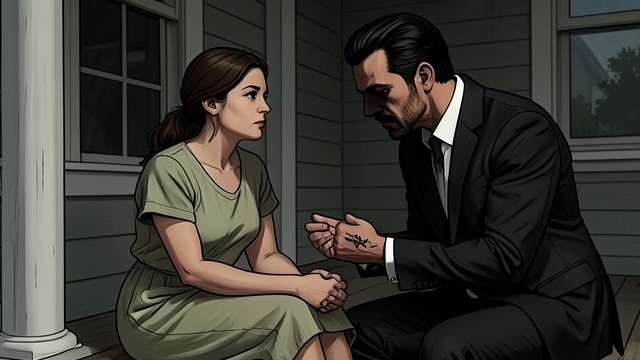
After Jacob’s arrest, Andrew tells Laurie about the violence in his family. He expects that the truth will prove smaller than the silence surrounding it.
Trust is altered
Laurie focuses on the years he withheld the information and the choice he denied her. The confession arrives at the worst possible moment and makes family history part of the crisis.
Jacob Learns the History
Jacob Learns the History
A second disclosure
Laurie raises the family history in a defense meeting, and Jacob learns that his father’s father is a murderer. He feels that his father denied him knowledge of his own identity.
Inheritance becomes personal
Jacob wonders whether violence might exist inside him as an inherited tendency. Andrew rejects the idea, but cannot prove that no such predisposition exists.
Testing the Family
Testing the Family
A defense possibility
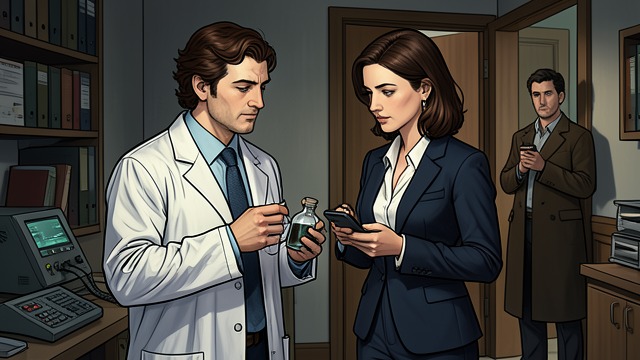
Dr. Vogel explains that behavioral genetics might be relevant as mitigation if Jacob is found to have committed the crime. Andrew resists providing a DNA sample because the science could become a public label.
A painful compromise
He agrees because Jacob’s defense may need every option. Testing Billy requires Andrew to contact the father he has avoided for decades, turning an abstract argument into a personal encounter.
A Gene Without an Answer

A Gene Without an Answer
Evidence with limits
The testing finds the MAOA variant in Billy, Andrew, and Jacob. Dr. Vogel stresses that predisposition is not destiny, but the phrase “murder gene” makes nuance difficult to preserve.
The family remains unresolved
The result cannot explain a specific act or settle whether Jacob committed the murder. Rather than resolving the family’s fear, it leaves inheritance suspended between biology, environment, and personal choice.
Before Jacob’s arrest, recalled during the 2008 inquiry
The night Jacob is arrested
The day after Jacob’s arraignment
Late summer 2007, before trial
During the trial and its aftermath
